
Beginning Band
Welcome! We are so glad you are here!
This article originally appeared on the Bachelors Degree website.
Nearly everyone enjoys music, whether by listening to it, singing, or playing an instrument. But despite this almost universal interest, many schools are having to do away with their music education programs. This is a mistake, with schools losing not only an enjoyable subject, but a subject that can enrich students’ lives and education. Read on to learn why music education is so important, and how it offers benefits even beyond itself.
1. Musical training helps develop language and reasoning: Students who have early musical training will develop the areas of the brain related to language and reasoning. The left side of the brain is better developed with music, and songs can help imprint information on young minds.
2. A mastery of memorization: Even when performing with sheet music, student musicians are constantly using their memory to perform. The skill of memorization can serve students well in education and beyond.
3. Students learn to improve their work: Learning music promotes craftsmanship, and students learn to want to create good work instead of mediocre work. This desire can be applied to all subjects of study.
4. Increased coordination: Students who practice with musical instruments can improve their hand-eye coordination. Just like playing sports, children can develop motor skills when playing music.
5. A sense of achievement: Learning to play pieces of music on a new instrument can be a challenging, but achievable goal. Students who master even the smallest goal in music will be able to feel proud of their achievement.
6. Kids stay engaged in school: An enjoyable subject like music can keep kids interested and engaged in school. Student musicians are likely to stay in school to achieve in other subjects.
7. Success in society: Music is the fabric of our society, and music can shape abilities and character. Students in band or orchestra are less likely to abuse substances over their lifetime. Musical education can greatly contribute to children’s intellectual development as well.
8. Emotional development: Students of music can be more emotionally developed, with empathy towards other cultures They also tend to have higher self esteem and are better at coping with anxiety.
9. Students learn pattern recognition: Children can develop their math and pattern-recognition skills with the help of musical education. Playing music offers repetition in a fun format.
10. Better SAT scores: Students who have experience with music performance or appreciation score higher on the SAT. One report indicates 63 points higher on verbal and 44 points higher on math for students in music appreciation courses.
11. Fine-tuned auditory skills: Musicians can better detect meaningful, information-bearing elements in sounds, like the emotional meaning in a baby’s cry. Students who practice music can have better auditory attention, and pick out predictable patterns from surrounding noise.
12. Music builds imagination and intellectual curiosity: Introducing music in the early childhood years can help foster a positive attitude toward learning and curiosity. Artistic education develops the whole brain and develops a child’s imagination.
13. Music can be relaxing: Students can fight stress by learning to play music. Soothing music is especially helpful in helping kids relax.
14. Musical instruments can teach discipline: Kids who learn to play an instrument can learn a valuable lesson in discipline. They will have to set time aside to practice and rise to the challenge of learning with discipline to master playing their instrument.
15. Preparation for the creative economy: Investing in creative education can prepare students for the 21st century workforce. The new economy has created more artistic careers, and these jobs may grow faster than others in the future.
16. Development in creative thinking: Kids who study the arts can learn to think creatively. This kind of education can help them solve problems by thinking outside the box and realizing that there may be more than one right answer.
17. Music can develop spatial intelligence: Students who study music can improve the development of spatial intelligence, which allows them to perceive the world accurately and form mental pictures. Spatial intelligence is helpful for advanced mathematics and more.
18. Kids can learn teamwork: Many musical education programs require teamwork as part of a band or orchestra. In these groups, students will learn how to work together and build camaraderie.
19. Responsible risk-taking: Performing a musical piece can bring fear and anxiety. Doing so teaches kids how to take risks and deal with fear, which will help them become successful and reach their potential.
20. Better self-confidence: With encouragement from teachers and parents, students playing a musical instrument can build pride and confidence. Musical education is also likely to develop better communication for students.
We know that band students represent the top of the academic scale in our schools. We know they are averaging 62 points higher on SAT tests, which would indicate they are stronger in verbal and math scores than other members of the student body. We also know band students are the ones who enjoy a successful high school career, go on to college, and become the leaders in our society. There is a definite link between the top achiever academically and the band student. They are one and the same.
- In many respects, band is a microcosm of our society. It demands high levels of responsibility, social skills, ongoing communication, analytical talents, and the important ability to work with others. Simply put, learning a musical instrument and continuing to explore the limitless possibilities of music provide an excellent preparation for life.
- In The Arts: An Essential Ingredient in Education, J. Buchen Milley states that "research shows that when arts are included in the student's curriculum, reading, writing and math scores improve." Like all arts, music has a profound effect on the academic success of the student.
- Band is a group effort. Members are required to shift from an I/Me reasoning to a We/Us concept. This means extending oneself beyond the normal considerations of much of our day-to-day living. Instead of the logic being, what's in it for me, it becomes, what's in it for us? The values of cooperation, communication, concentration, correlation, and completion come into play each rehearsal and performance.
- Band builds positive self-worth. Although we share many similarities with our athletic counterparts, BAND is a place for everyone. Rarely is a person serving as an alternate or substitute. Everyone in the band plays a starting role.
- Music is one of the few academic disciplines that requires the student to master skills and apply them in performance. In other words, music involves multiple forms of learning.
- "New research on intelligence and brain function point in exciting future directions that tie directly to music, while the continuing use of music as part of the curriculum is clearly associated with both academic skills and personal characteristics that are highly desirable for school progress and for developing the kind of well-educated young people we know we need for the nation's well-being."
- Students (1993) with experience in music performance scored measurably higher in both the verbal and math sections of the Standardized Achievement Test (22 points above the mean on verbal and 18 points above the mean on math).
- There continues to be a significant (and growing) spread between the scores obtained by musicians and those of their non-musical counterparts.
- The correlation between cognitive learning and musical understanding continues to prove they are linked, and improving one will develop the other. In fact, music is suspected to be the key for unlocking the scientific mind.
- The theory of "multiple intelligences" tags music as one of the separate minds, and being exposed to music strengthens all other learning forms.
(If you have decided to play oboe, bassoon, French horn or Tuba - please talk to Mrs. Peterson before getting an instrument)
I would HIGHLY recommend not waiting until after school starts to get your instrument. We won't be using them until the first full week of school, but as all schools are starting at the same time...it may be harder to find the instrument you want to play. I would recommend looking at and renting them before school starts. Remember, KMS does have a few instruments to rent in instances of financial need. See Mrs. Peterson when school starts if you are in need of a KMS instrument.
You can get your own personal instrument at any of the local music stores, pawn shops, under the bed, grandpa's closet and the next door neighbors house too! Any instrument not coming directly from a qualified music store will need to be taken to a instrument repair shop to make sure they are in good working order before school starts.
When you go to a music store, tell them what instrument (or instruments) that you are interested in and they will show them to you and most will let you try them out. Don't worry if you don't sound good - I'll help with that when school starts!
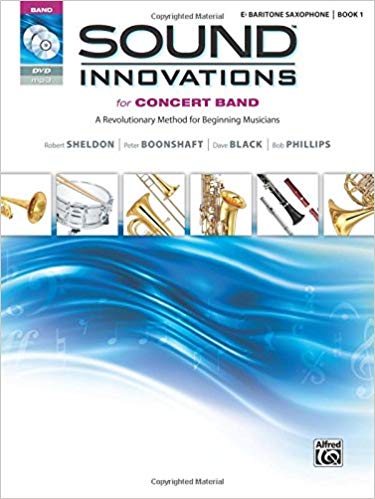
Once you have picked out your instrument, there are few more things you will need....reeds (for oboe, bassoon, clarinet and saxophone), all the cleaning supplies and the beginning band book. All local stores have cleaning kits available - all wind instruments must be cleaned every time they are played. (Wind meaning anything you blow air into) Percussion instruments do not need to have a cleaning kit but will need drum sticks and bell mallets in a mallet bag. The band book that KMS band uses is the Sound Innovations book #1 for the instrument that you choose. Be sure to put your name in it right away so it doesn't get lost.
Once you have your instrument, make sure you label it with a name tag and you keep the paperwork someplace safe at home. Band instruments can often be put on home owners insurance plans, and you will need the information on the rental contract in order to add that.
|
Local Music Stores Blue Rider Music (11 miles from KMS) 595 W. Ustick Rd. Meridian, ID 83634 208-888-6238 Welch Music (13.5 miles from KMS) 12516 W. Fairview Ave Boise, ID 83713 208-322-3388 Dunkley Music Meridian (14 miles from KMS) 3410 N. Eagle Rd. Meridian, ID 83646 208-342-5549 Dunkley Music Nampa (15 miles from KMS) 513 W Karcher Rd Nampa, ID 83651 (208) 461-2605 Dorsey Music (16 miles from KMS) 1231 Caldwell Blvd Nampa, ID 83651 208-466-5681 |
 |
Mrs. Peterson
I have spent half of my life teaching band students to love to play their instruments and love being in band. As of the 2025-2026 school year, I've been teaching for 31 years, and 27 of them have been in Kuna! I spent one year teaching in the Melba School District and then three years in the New Plymouth School District before moving to the KSD. What a great place to work and want fantastic students I have! I've been here long enough that not only do I get wedding announcements from former students, I'm getting baby shower announcements and I'm even teaching "Grand students!" Yes - children of former students!
Get in Touch
I can't wait to meet you and get started in this amazing thing called BAND! Feel free to stop in and see me any time! I'd love to talk to you about band, band instruments and pretty much anything music related.
April Peterson
-
20 Important Benefits of Music In Our Schools
This article originally appeared on the Bachelors Degree website.
Nearly everyone enjoys music, whether by listening to it, singing, or playing an instrument. But despite this almost universal interest, many schools are having to do away with their music education programs. This is a mistake, with schools losing not only an enjoyable subject, but a subject that can enrich students’ lives and education. Read on to learn why music education is so important, and how it offers benefits even beyond itself.
1. Musical training helps develop language and reasoning: Students who have early musical training will develop the areas of the brain related to language and reasoning. The left side of the brain is better developed with music, and songs can help imprint information on young minds.
2. A mastery of memorization: Even when performing with sheet music, student musicians are constantly using their memory to perform. The skill of memorization can serve students well in education and beyond.
3. Students learn to improve their work: Learning music promotes craftsmanship, and students learn to want to create good work instead of mediocre work. This desire can be applied to all subjects of study.
4. Increased coordination: Students who practice with musical instruments can improve their hand-eye coordination. Just like playing sports, children can develop motor skills when playing music.
5. A sense of achievement: Learning to play pieces of music on a new instrument can be a challenging, but achievable goal. Students who master even the smallest goal in music will be able to feel proud of their achievement.
6. Kids stay engaged in school: An enjoyable subject like music can keep kids interested and engaged in school. Student musicians are likely to stay in school to achieve in other subjects.
7. Success in society: Music is the fabric of our society, and music can shape abilities and character. Students in band or orchestra are less likely to abuse substances over their lifetime. Musical education can greatly contribute to children’s intellectual development as well.
8. Emotional development: Students of music can be more emotionally developed, with empathy towards other cultures They also tend to have higher self esteem and are better at coping with anxiety.
9. Students learn pattern recognition: Children can develop their math and pattern-recognition skills with the help of musical education. Playing music offers repetition in a fun format.
10. Better SAT scores: Students who have experience with music performance or appreciation score higher on the SAT. One report indicates 63 points higher on verbal and 44 points higher on math for students in music appreciation courses.
11. Fine-tuned auditory skills: Musicians can better detect meaningful, information-bearing elements in sounds, like the emotional meaning in a baby’s cry. Students who practice music can have better auditory attention, and pick out predictable patterns from surrounding noise.
12. Music builds imagination and intellectual curiosity: Introducing music in the early childhood years can help foster a positive attitude toward learning and curiosity. Artistic education develops the whole brain and develops a child’s imagination.
13. Music can be relaxing: Students can fight stress by learning to play music. Soothing music is especially helpful in helping kids relax.
14. Musical instruments can teach discipline: Kids who learn to play an instrument can learn a valuable lesson in discipline. They will have to set time aside to practice and rise to the challenge of learning with discipline to master playing their instrument.
15. Preparation for the creative economy: Investing in creative education can prepare students for the 21st century workforce. The new economy has created more artistic careers, and these jobs may grow faster than others in the future.
16. Development in creative thinking: Kids who study the arts can learn to think creatively. This kind of education can help them solve problems by thinking outside the box and realizing that there may be more than one right answer.
17. Music can develop spatial intelligence: Students who study music can improve the development of spatial intelligence, which allows them to perceive the world accurately and form mental pictures. Spatial intelligence is helpful for advanced mathematics and more.
18. Kids can learn teamwork: Many musical education programs require teamwork as part of a band or orchestra. In these groups, students will learn how to work together and build camaraderie.
19. Responsible risk-taking: Performing a musical piece can bring fear and anxiety. Doing so teaches kids how to take risks and deal with fear, which will help them become successful and reach their potential.
20. Better self-confidence: With encouragement from teachers and parents, students playing a musical instrument can build pride and confidence. Musical education is also likely to develop better communication for students.
Why take band?
We know that band students represent the top of the academic scale in our schools. We know they are averaging 62 points higher on SAT tests, which would indicate they are stronger in verbal and math scores than other members of the student body. We also know band students are the ones who enjoy a successful high school career, go on to college, and become the leaders in our society. There is a definite link between the top achiever academically and the band student. They are one and the same.
- In many respects, band is a microcosm of our society. It demands high levels of responsibility, social skills, ongoing communication, analytical talents, and the important ability to work with others. Simply put, learning a musical instrument and continuing to explore the limitless possibilities of music provide an excellent preparation for life.
- In The Arts: An Essential Ingredient in Education, J. Buchen Milley states that "research shows that when arts are included in the student's curriculum, reading, writing and math scores improve." Like all arts, music has a profound effect on the academic success of the student.
- Band is a group effort. Members are required to shift from an I/Me reasoning to a We/Us concept. This means extending oneself beyond the normal considerations of much of our day-to-day living. Instead of the logic being, what's in it for me, it becomes, what's in it for us? The values of cooperation, communication, concentration, correlation, and completion come into play each rehearsal and performance.
- Band builds positive self-worth. Although we share many similarities with our athletic counterparts, BAND is a place for everyone. Rarely is a person serving as an alternate or substitute. Everyone in the band plays a starting role.
- Music is one of the few academic disciplines that requires the student to master skills and apply them in performance. In other words, music involves multiple forms of learning.
- "New research on intelligence and brain function point in exciting future directions that tie directly to music, while the continuing use of music as part of the curriculum is clearly associated with both academic skills and personal characteristics that are highly desirable for school progress and for developing the kind of well-educated young people we know we need for the nation's well-being."
- Students (1993) with experience in music performance scored measurably higher in both the verbal and math sections of the Standardized Achievement Test (22 points above the mean on verbal and 18 points above the mean on math).
- There continues to be a significant (and growing) spread between the scores obtained by musicians and those of their non-musical counterparts.
- The correlation between cognitive learning and musical understanding continues to prove they are linked, and improving one will develop the other. In fact, music is suspected to be the key for unlocking the scientific mind.
- The theory of "multiple intelligences" tags music as one of the separate minds, and being exposed to music strengthens all other learning forms.
-
-
Now is the fun part! Getting your instrument!
(If you have decided to play oboe, bassoon, French horn or Tuba - please talk to Mrs. Peterson before getting an instrument)
I would HIGHLY recommend not waiting until after school starts to get your instrument. We won't be using them until the first full week of school, but as all schools are starting at the same time...it may be harder to find the instrument you want to play. I would recommend looking at and renting them before school starts. Remember, KMS does have a few instruments to rent in instances of financial need. See Mrs. Peterson when school starts if you are in need of a KMS instrument.
You can get your own personal instrument at any of the local music stores, pawn shops, under the bed, grandpa's closet and the next door neighbors house too! Any instrument not coming directly from a qualified music store will need to be taken to a instrument repair shop to make sure they are in good working order before school starts.
When you go to a music store, tell them what instrument (or instruments) that you are interested in and they will show them to you and most will let you try them out. Don't worry if you don't sound good - I'll help with that when school starts!
Once you have picked out your instrument, there are few more things you will need....reeds (for oboe, bassoon, clarinet and saxophone), all the cleaning supplies and the beginning band book. All local stores have cleaning kits available - all wind instruments must be cleaned every time they are played. (Wind meaning anything you blow air into) Percussion instruments do not need to have a cleaning kit but will need drum sticks and bell mallets in a mallet bag. The band book that KMS band uses is the Sound Innovations book #1 for the instrument that you choose. Be sure to put your name in it right away so it doesn't get lost.
Once you have your instrument, make sure you label it with a name tag and you keep the paperwork someplace safe at home. Band instruments can often be put on home owners insurance plans, and you will need the information on the rental contract in order to add that.
Local Music Stores
Blue Rider Music (11 miles from KMS)
595 W. Ustick Rd.
Meridian, ID 83634
208-888-6238
Welch Music (13.5 miles from KMS)
12516 W. Fairview Ave
Boise, ID 83713
208-322-3388
Dunkley Music Meridian (14 miles from KMS)
3410 N. Eagle Rd.
Meridian, ID 83646
208-342-5549
Dunkley Music Nampa (15 miles from KMS)
513 W Karcher Rd
Nampa, ID 83651
(208) 461-2605
Dorsey Music (16 miles from KMS)
1231 Caldwell Blvd
Nampa, ID 83651
208-466-5681
-
Check out the links below for more beginning band informationWant to get started on your instrument before band starts? Check out the videos on the instrument page to get yourself started! Don't forget to email Mrs. Peterson with questions so I can help make sure you get started correctly.
-
Mrs. Peterson
I have spent half of my life teaching band students to love to play their instruments and love being in band. As of the 2025-2026 school year, I've been teaching for 31 years, and 27 of them have been in Kuna! I spent one year teaching in the Melba School District and then three years in the New Plymouth School District before moving to the KSD. What a great place to work and want fantastic students I have! I've been here long enough that not only do I get wedding announcements from former students, I'm getting baby shower announcements and I'm even teaching "Grand students!" Yes - children of former students!
Get in Touch
I can't wait to meet you and get started in this amazing thing called BAND! Feel free to stop in and see me any time! I'd love to talk to you about band, band instruments and pretty much anything music related.
April Peterson